
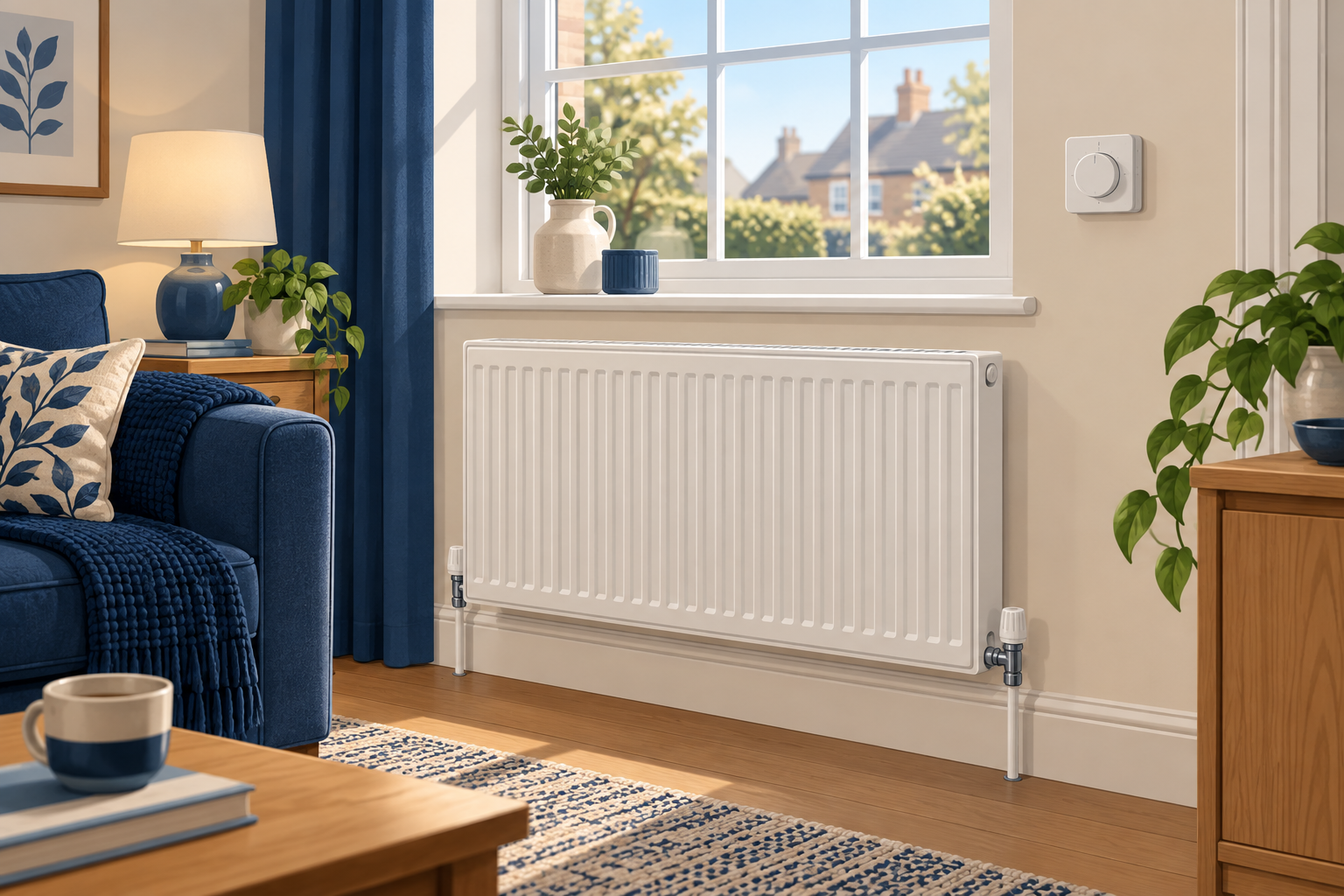

If some rooms warm up while others stay cold, record the pattern before asking for a heating assessment. Which rooms are affected, when it happens and whether anything recently changed are useful starting points. A cold radiator alone does not establish the cause.
This guide is about useful observations you can make during normal use. It does not provide instructions for bleeding radiators, balancing a system, adjusting boiler pressure or opening equipment. Those tasks need advice suitable for the actual system and the person carrying them out.
Make a simple room-by-room note
Write the room names on a sheet of paper or a rough floor plan. Beside each one, note whether the room usually becomes comfortable, remains cooler than expected or only warms at certain times. You do not need measurements or a detailed drawing to explain that an upstairs bedroom behaves differently from the living room.
Describe what you know without touching hot surfaces or repeatedly testing the heating. For example: “The downstairs rooms warm during the usual evening programme, but the back bedroom stays cold.” That gives the engineer a clearer starting point than saying the whole system is failing.
If you have already noticed whether several radiators behave similarly, include that. Leave unknown details blank rather than trying to produce a complete technical survey yourself.
Separate a new problem from a long-standing pattern
Has the room always been difficult to heat, or did the change begin recently? Make a note of the last time you remember it working as expected. Mention recent decorating, a moved radiator, a controls replacement or work elsewhere on the heating system.
Also explain whether hot water is affected. Heating and hot-water symptoms can be relevant together, but they should be described separately. If a boiler display already shows a message or fault code, copy the exact wording from a safe position. Do not repeatedly reset the appliance to see whether a different code appears.
Identify the controls without guessing their settings
Different controls do different jobs. A timer can schedule heating, a room thermostat responds to room temperature, and a thermostatic radiator valve can regulate an individual radiator. The Energy Saving Trust’s controls guide explains these general roles.
Write down the make and model of the controls if available in your instructions. Note the normal programme and any recent changes you already know about. Ask the engineer if the controls and the heating layout need to be considered together. Do not assume a higher setting will resolve uneven heating or that every numbered valve represents the same temperature.
Ask what an assessment will cover
When arranging a visit, ask whether it will consider the affected radiators, the controls and the wider system. Tell the team about any access restrictions, including furniture around radiators or equipment in a loft. Leave unsafe access and heavy lifting for discussion rather than attempting them before anyone arrives.
Keep three questions ready: what can be assessed during the visit, what is the charge, and how would any further work be quoted? The purpose is to understand the next step, not obtain a guaranteed diagnosis from a description alone.
UKHS provides heating and general plumbing services. Call 07494 144363 with your postcode and room-by-room notes to discuss availability and scope. Our boiler repair enquiry guide covers the additional details to share if the boiler itself is also behaving unusually.