
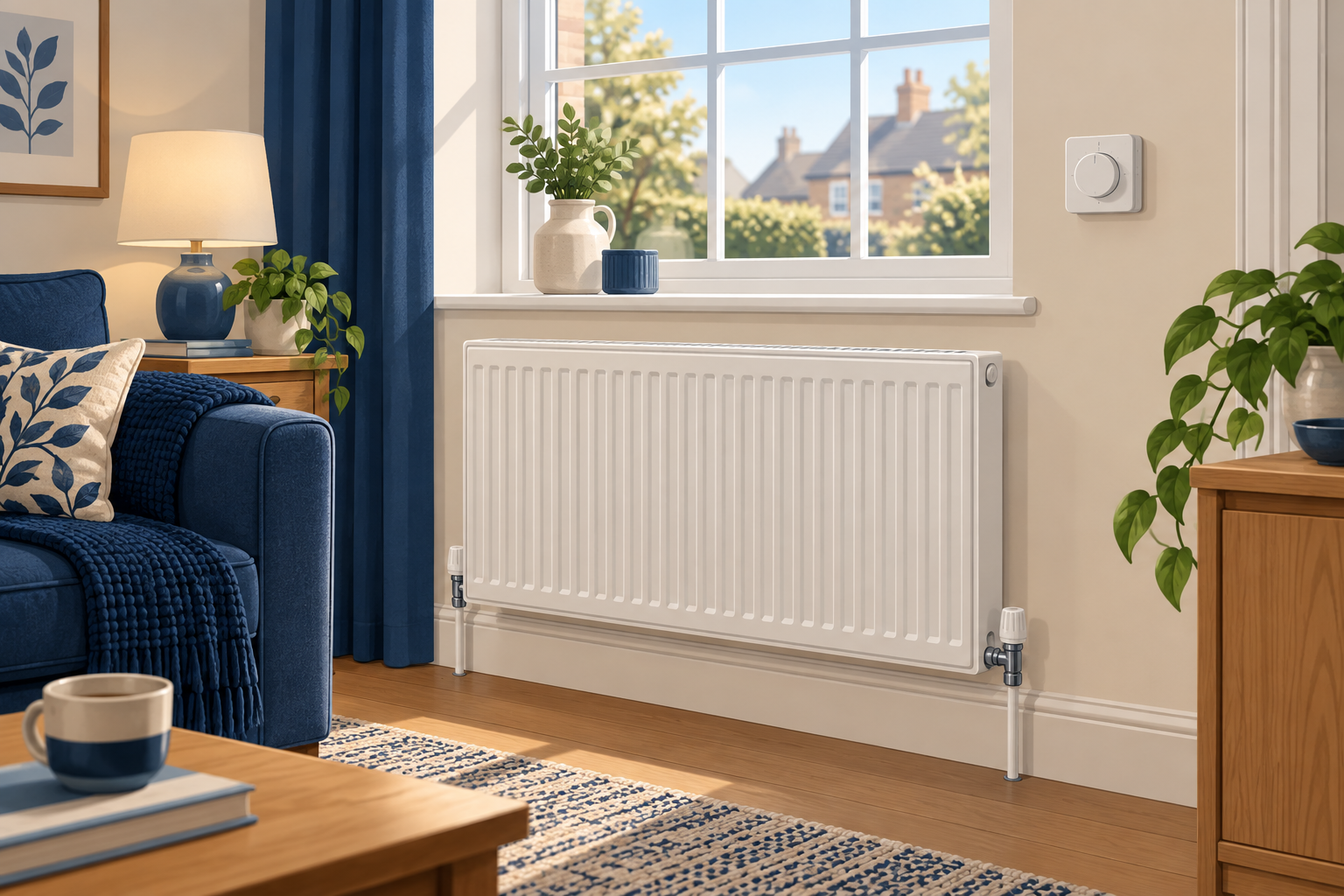

A thermostatic radiator valve, often called a TRV, helps control the temperature around an individual radiator by adjusting the water flowing through it. A conventional TRV has a different role from the room thermostat that controls the wider heating system. Understanding both makes it easier to describe a room that feels too warm or too cold.
Start with the instructions for the controls actually fitted in your home. Similar-looking heads can have different markings, and connected smart valves may work as part of a wider system.
What a conventional TRV does
The valve senses the air temperature near it and responds to the selected setting. Drayton’s householder guide explains that its conventional TRVs regulate their own radiators rather than controlling the boiler. It also explains why covering the valve with curtains or furniture can interfere with sensing the room temperature.
A radiator therefore does not need to feel equally warm throughout every moment of a heating period. However, its temperature alone cannot confirm that the room control or system is working correctly. Describe the room comfort and the pattern you have noticed, rather than diagnosing a faulty valve.
Read the markings for your own model
Many conventional heads use numbers and symbols. Do not assume that a particular number means an exact temperature on every valve. Look for the maker’s name in paperwork or on a visible part of the head, without removing it.
The correct user guide should explain the settings, any frost symbol and the limits of the product’s function. A symbol on one valve is not a guarantee that all the pipework in a property is protected from freezing.
If you cannot identify the model, an ordinary photograph may help the engineer once a way of sharing it has been agreed. Include the radiator and nearby room layout so the position of curtains or furniture is clear. Do not force a stiff control or dismantle it.
Keep the wider heating controls in view
Tell the engineer where the main room thermostat is and whether you have a programmer, separate heating zones or an app. These details matter when interpreting what one room is doing. A conventional valve cannot make a radiator heat when the wider system is not supplying it with heat.
Smart controls require their own instructions. Avoid applying advice for a simple numbered valve to a connected valve with schedules and room sensors. If different products have been combined over time, ask how they are intended to work together.
A useful room-control enquiry
- Name the room and describe whether it feels too warm, too cold or inconsistent.
- Record the visible valve setting and any message already shown by a connected control.
- Say when the pattern happens during normal heating use.
- Mention recent furniture changes, decorating or control replacement.
- Say whether other rooms behave differently.
For example: “The study stays cold during the evening heating period, while the hall warms up. A new desk is beside the study radiator.” That gives useful context without deciding that the desk or valve is the cause.
Arrange an assessment with a clear scope
UKHS can discuss radiator and heating-control enquiries. Ask whether the proposed visit covers the room controls, the wider heating pattern or both. Our service-or-repair guide helps if a boiler appointment is also being considered.
Call 07494 144363 with your postcode to discuss the concern. UKHS is based in Leigh; coverage, availability, charges and job scope need confirmation. See our contact details for the phone-first enquiry route.