
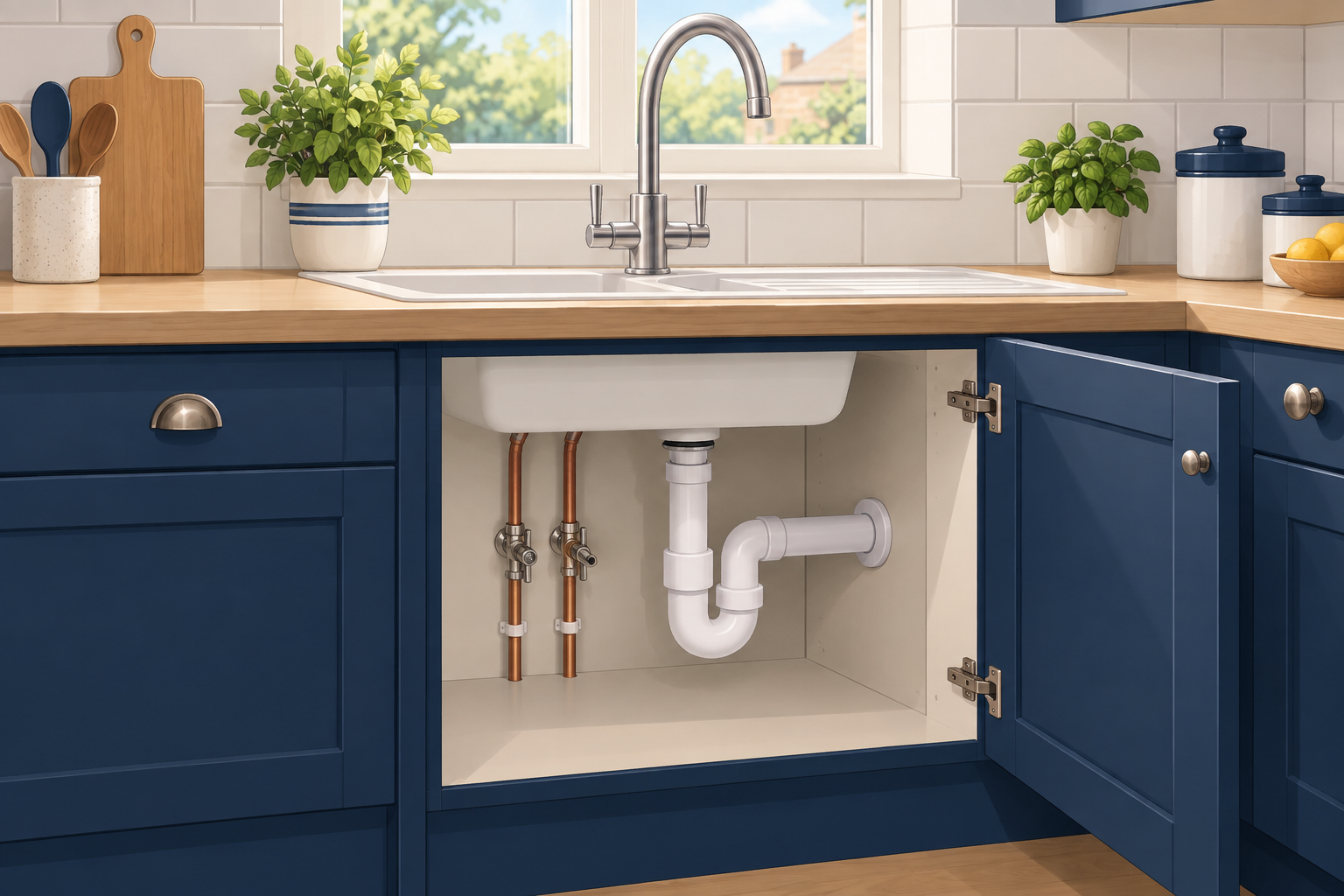

A dripping tap is easier to discuss when you can say exactly where water appears and when it happens. A drip from the spout after the tap is turned off is different from water around the base or underneath the basin. The visible symptom does not prove which component needs replacing.
You do not need to dismantle the tap to prepare an enquiry. Gather what is already visible, any product information you have and the practical access details. If water is escaping beyond the fixture or creating a hazard, explain that promptly rather than treating the issue as a minor drip.
Describe the point where water appears
Start with the room, the type of fixture and the location of the water. Is the drip at the end of the spout, around a handle, near the tap’s base or in the cupboard below? Say if the surrounding area is dry or if water is spreading.
A safe photograph of the complete tap can be more useful than a very close image that hides the fixture. If you have noticed water underneath during ordinary use, describe where it collects without reaching into a wet cupboard near electrical equipment.
Keep observations separate from assumptions. “The kitchen mixer continues to drip from the spout after use” is useful. “It needs a washer” may turn out to be wrong, particularly where a different mechanism or another problem is involved.
Note the timing and recent history
Does the dripping continue, or does it stop shortly after use? Did the change begin suddenly, or has it gradually become more noticeable? Report the pattern you already know without repeatedly operating a fitting that is making the problem worse.
Mention previous repairs or a recent installation if you have the details. A receipt, product box or instruction leaflet may identify the make and model. If the tap came with the house and you do not know its history, say so.
A model name can help a plumber consider parts availability, but it does not guarantee that a particular repair is appropriate or that a part will be available immediately. Let the assessment establish that.
Explain access and household needs
Tell the plumber whether the tap is on a basin, sink, bath or wall. Describe built-in units or panels that affect access. Do not remove tiles, cut panels or force isolation valves simply to prepare for the visit.
If the home is rented, check who should authorise the repair. If the fixture is the only practical water outlet for an important household task, mention that when discussing timing. It helps explain the impact without creating an expectation of a guaranteed urgent visit.
Discuss repair options before buying parts
- Can this type of tap be assessed?
- What is the visit or diagnostic charge?
- How will any parts and additional work be quoted?
- Could access work or making good need a separate agreement?
- What happens if repair is not practical or the product cannot be identified?
Do not buy a replacement cartridge or an entire new tap from appearance alone. Fittings that look similar can have different requirements. A repair enquiry and the choice of a replacement product are separate decisions.
Call UKHS on 07494 144363 with your postcode and tap details to discuss plumbing repairs. Availability and scope must be confirmed. Our plumbing quote guide helps set out any planned follow-on work.