

When you call about a water leak, explain where water is visible, whether it is still escaping and what it is affecting. A clear description helps a plumber understand the situation and discuss the next available step. It does not require you to find the hidden source or take anything apart.
Put safety before gathering details. Keep away from water near sockets, electrical equipment or damaged ceilings. Do not enter a hazardous area to take a photograph. If there is an immediate danger, seek appropriate emergency help rather than waiting for a routine plumbing response.
Describe the location you can actually see
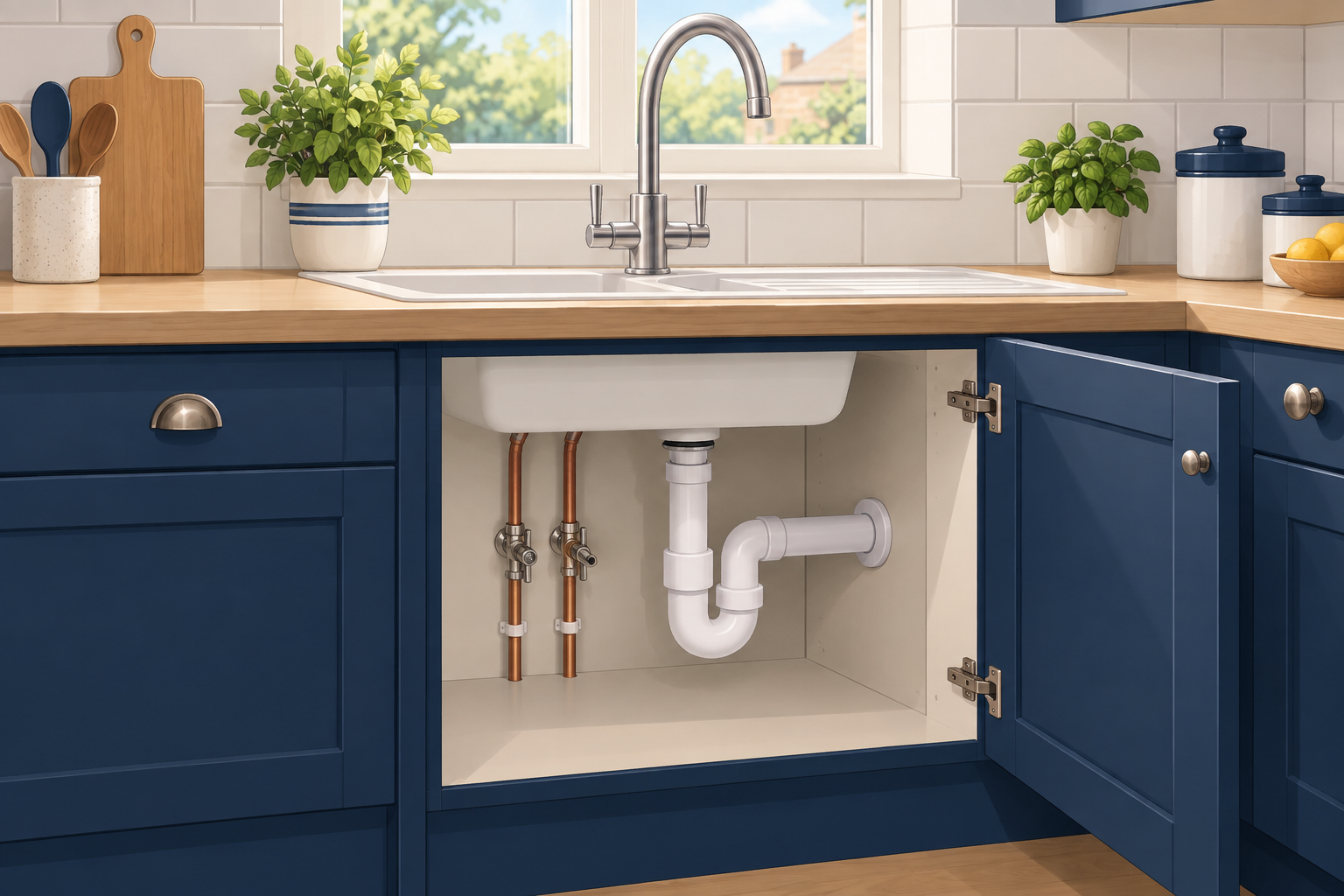
Start with the room and a familiar landmark: beneath the kitchen sink, beside the toilet, below a radiator or on the ceiling underneath a bathroom. Say whether you can see a dripping fitting or only the water that has collected. These are different observations, and both are useful.
For example, “There is a damp patch under the upstairs bathroom” is more reliable than “the bath waste has failed” if the pipework is concealed. Water may travel before it becomes visible. Describe the evidence without choosing a diagnosis for the plumber.
A photograph from a safe, dry position can show the general area and its surroundings. Ask whether the plumber wants one and how to send it. Avoid opening panels, removing fittings or climbing to improve the view.
Explain when it happens and what has changed
Note when you first noticed the problem and whether the area has changed since then. Does water appear continuously, after normal use of a particular tap, or at times you have not been able to connect to an activity? Report the pattern you already observed. Do not deliberately run water to reproduce a leak that may cause more damage.
Mention recent work, an appliance installation or a fitting that has been knocked, if relevant. Say whether anyone has already attended or given advice. A short timeline is often easier to follow than several possible explanations.
Make the immediate impact clear
Tell the plumber if water is spreading, entering another property, affecting access or leaving the home without a usable water supply. If the property is rented or managed, contact the person responsible for authorising repairs and explain any urgent risk. Do not wait for a quote discussion to tell someone that another flat may be affected.
If you have already isolated a supply using a familiar, safely accessible control, say which one and whether the visible flow changed. Do not force unfamiliar valves or take risks to reach a stop tap. Ask for advice appropriate to the situation if you are unsure what can be done safely.
A short checklist for your call
- Your postcode and the type of property.
- The room and exact place where water is visible.
- Whether water is still escaping and what is affected.
- When it began and any pattern already noticed.
- Any recent work or advice received.
- Who can authorise the visit and provide safe access.
Ask about current availability, the visit or assessment charge, and how additional work will be agreed. An enquiry does not confirm an arrival time or a completed repair. For planned work after the immediate issue, our plumbing quote guide explains how to describe the wider job.
Call UKHS on 07494 144363 with your postcode to check urgent plumbing availability. Coverage, timing and scope must be confirmed. Online requests are currently unavailable, so please use the phone.